VRENTY CAR · SARANDA
Saranda to Finiq by Car: A Phoinike Visit Plan
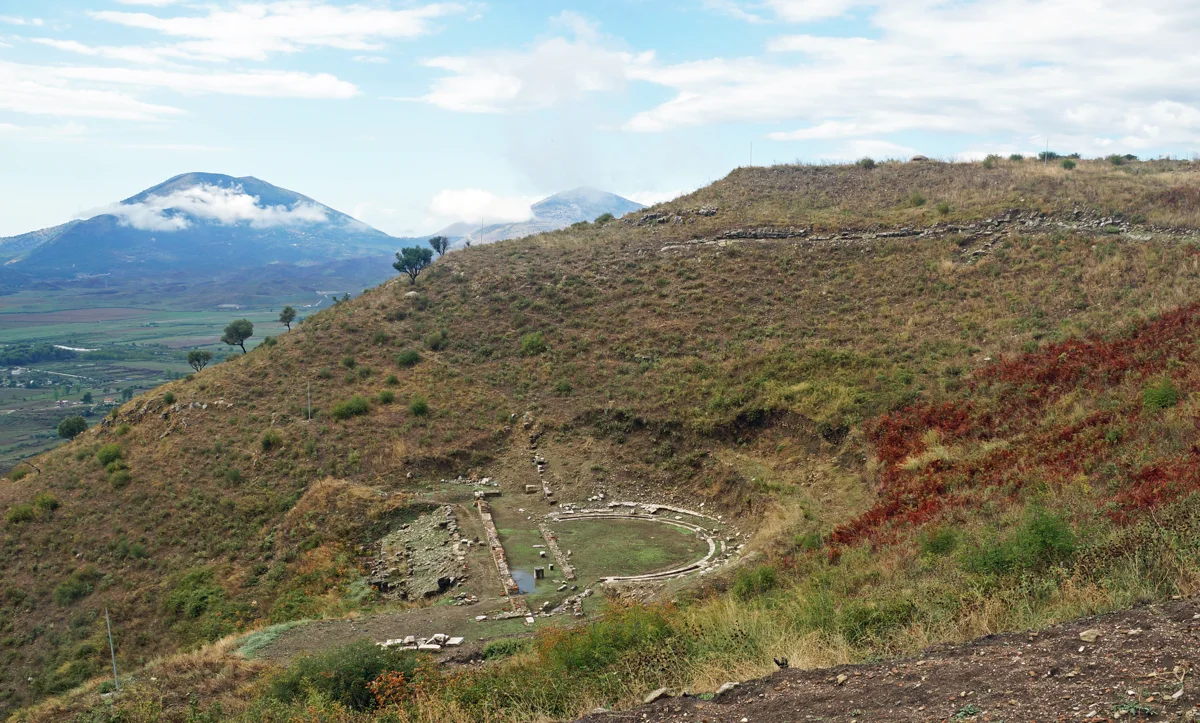
Phoinike, near modern Finiq, offers a different archaeological outing from the better-known Butrint trip. Its hilltop setting and surviving ancient structures can give a Saranda stay another cultural day, provided you plan the arrival and the walking visit separately. Do not treat a pin on the ruins as a place to drive to. This guide explains how to decide whether the visit suits your group, what to confirm before using a rental car and why combining several archaeological stops is not always the best plan.
Updated: 2026-10-26
On this page
Understand the names before opening navigation
Finiq is the modern place name; Phoinike, Phoenice and related spellings refer to the ancient city in visitor material. Use the archaeological park's full name when searching. A route to the municipality, a village centre and the park's visitor entrance can produce different destinations. Save the official tourism description alongside the actual visitor directions so you can distinguish them.
Albania's national tourism agency identifies the ancient site near Saranda and describes its hilltop setting, theatre, fortifications and remains from several periods. This establishes why it is a cultural destination. It does not establish today's admission hours, the condition of every path or a guaranteed parking space. Keep destination information and operational visitor information separate.
Tell anyone arranging transport that you mean the archaeological park, not simply Finiq village. Ask where the vehicle can legally stop and where the visit starts on foot. That small clarification is more useful than adding a precise-looking driving duration that may not describe your accommodation, route or final approach.
Decide whether Phoinike or Butrint best fits the day
Choose Phoinike when the hilltop archaeological setting is a particular interest, rather than because it is another name to add to a list. Choose Butrint when that is the site you most want to understand and you have already planned its visitor arrangements. Seeing both during a holiday can be rewarding, but they do not need to occupy the same day.
For a first archaeological outing, consider how much walking and interpretation your group enjoys. Someone who likes reading site information and examining structures may want considerably more time than someone interested in a brief landscape view. Agree on that expectation before selecting two substantial visits. The driver should not have to compress the second visit simply because the first took longer than expected.
The separate Butrint driving guide covers that destination's approach and wider day plan. Use it to compare the outings, not as proof that the access conditions at Finiq are identical. A rental car can connect places, but it cannot make their ticketing, surfaces or visitor facilities interchangeable.
Confirm the visitor road before committing the rental
Ask for the current paved visitor approach to the park and the authorised stopping or parking location. A third-party route description can be a useful lead, but it is not a guarantee of today's surface, works or access restrictions. If you cannot establish a suitable permitted approach, choose a locally arranged transfer or postpone the visit rather than testing an uncertain track in the rental.
Localrent's Albania route guidance limits rental use to paved roads and warns that navigation can suggest unsuitable routes. The fact that a destination is not individually named in a prohibited-route list is not permission to use every road leading to it. Review the agreement for your particular vehicle and ask the supplier when the approach remains unclear.
Keep the vehicle journey separate from the archaeological visit. Do not attempt to drive onto excavation areas or follow a walking trail shown as a shortcut. Stop at the confirmed lawful arrival point and follow the park's instructions from there. If conditions on arrival contradict the information you received, reconsider the visit rather than continuing because the day was already planned.
Leave Saranda with a clear first stop and return plan
Start from your real accommodation or collection location. A visitor staying above the seafront has a different departure task from someone collecting near the port. Include the handover if the rental begins that morning, and avoid promising the group an attraction arrival time before the car and documents are ready.
Review the route to the confirmed visitor approach shortly before leaving. Save the destination details in a form that remains accessible if mobile reception is inconvenient. Have a passenger manage navigation where possible, or set it while stationary. Do not let a last-minute route change turn into an improvised stop in an unsuitable place.
Work out the return commitment before adding lunch or another excursion. If you have a ferry, airport transfer or rental handover later, that deadline should govern the outing. A modest cultural visit can fit a holiday well; a rushed drive back to protect a fixed connection is a poor reason to keep adding stops.
Plan a walking visit around the terrain and weather
A hilltop archaeological site is not the same experience as a museum with a single indoor route. Expect to organise the visit around outdoor conditions and the paths currently open to visitors. Wear footwear suited to walking, bring what your group needs for time outdoors and avoid relying on an unverified facility being available at precisely the point you want a break.
For a visitor with limited mobility, ask specific questions about the route from the arrival point to the structures of interest. A short distance on a map does not prove a level or step-free path. If the operator cannot confirm suitable access, do not present the outing as accessible on the strength of a general destination description.
Let the least comfortable member of the group influence the plan. You can agree to a shorter permitted circuit rather than expecting everyone to reach every visible ruin. With children, set clear meeting and supervision arrangements and follow the site's barriers. A photograph of someone standing on ancient stonework is not an instruction to do the same.
Give the remains a purpose in your visit
The theatre, defensive structures and traces of later occupation offer different ways to look at Phoinike. Rather than racing between labelled points, choose a question: how did the hill influence the city's layout, what remains visible of public life, or how did the site change over time? Use the official overview as an introduction and the information available on site to understand what you are actually seeing.
The national tourism account places the city's development across ancient and later periods. That layered history is a reason to avoid assuming every wall belongs to the same date. You do not need a memorised chronology to enjoy the visit, but it helps to distinguish a broad historical introduction from the interpretation of a particular structure.
If detailed explanation is important, enquire about a qualified guide and confirm the language, meeting place and scope in advance. Do not assume a guide is included in a ticket or will be waiting at the entrance. For an independent visit, keep enough time to read the available information rather than budgeting only for walking between photographs.
Choose one additional stop only when it genuinely fits
A meal or an unhurried return to Saranda may be enough after the archaeological visit. You do not need to add the Blue Eye, Gjirokaster and the coast to justify the rental day. Each has its own approach, walking and timing questions. The distance between map pins leaves out the part of the day spent actually visiting them.
If you want a second destination, choose it before leaving and check its access independently. Make it optional until you know how the first visit went. A group tired from an outdoor walk may appreciate a simpler afternoon more than another substantial attraction. Keep the original return margin rather than spending it twice.
For a different day, the Blue Eye guide helps separate the drive from the onward visitor experience. Its arrangements should not be copied to Phoinike. Planning distinct days around distinct places usually gives you more useful flexibility than combining every nearby name into a rigid loop.
A car or a transfer: compare the actual services
If you already have a rental for several Saranda outings, using it for a confirmed permitted approach may be convenient. If this is your only planned drive, compare a transfer or guided visit with the complete rental arrangement. Include collection, return, any required extra equipment and the responsibilities of driving, not simply the headline price.
For a transfer, ask whether the driver waits, where the return pickup happens and what happens if you shorten or extend the visit. For a guided service, distinguish transport from interpretation and admission. A vehicle journey to the park does not automatically include the return at any time you choose or a guide inside the site.
For self-drive, choose a car you can handle comfortably on the confirmed approach and in the authorised parking area. The small-car-versus-SUV comparison explains why vehicle size and route permission are different questions. Do not pay for a larger category as a substitute for resolving an access restriction.
Keep the rental conditions and assistance arrangements clear
Check the booking's driver requirements, permitted use, mileage and handover locations. If your visit is part of a longer stay, make sure the rental period covers the actual return time. A car due back in the afternoon should not be treated as available for an evening outing unless the supplier confirms an extension under the booking's terms.
Ask about payment requirements separately from the route. A no-deposit offer does not remove every possible charge or establish that no card is needed. Confirm the online payment, collection balance and any security arrangement for the selected vehicle. The destination article cannot promise a particular model, price or payment option for your dates.
Keep the supplier's assistance contact available. For a vehicle problem, damage or breakdown, follow the supplier's instructions and relevant official procedures instead of making an improvised repair or abandoning the vehicle to continue sightseeing. The trip should remain within the agreement even when the planned schedule changes.
Check admission without importing an old tariff
Before travelling, confirm the park's current visitor hours, last entry, payment arrangements and any temporary access limits. A tourism page describing the remains is not a live ticket office. An old travel photograph or review may describe a different season, so use it as background rather than as the final authority for your date.
Ask whether any parts of the site are unavailable during your intended visit. Archaeological work and visitor access are not necessarily the same thing; a structure can be documented in a guide without being open for close inspection. Follow the current route and barriers instead of trying to recreate a photograph taken during another period.
This guide does not quote an unverified ticket or parking price. Keep those costs in your comparison using current information from the responsible operator. If you cannot confirm that the main visit is possible, choose another outing with clear arrangements and return to Phoinike when the uncertainty has been resolved.
Questions to resolve before leaving
Can you drive to the ruins? Treat the answer as a vehicle approach plus a walking visit, not permission to drive inside the ancient site. Confirm the authorised paved approach and arrival point first. If either remains uncertain, a suitable transfer or another day's plan is preferable to improvising with a rental.
Should you combine Phoinike and Butrint? Only if both visits, their current access and the group's pace fit comfortably. There is no requirement to see them on the same day. Separate visits give you more freedom to focus on each site's character and to respond to conditions without rushing the return.
Is the visit suitable after arriving by ferry? Start with your actual arrival, rental handover and accommodation arrangements. Do not build an immediate archaeological excursion around an assumed ferry arrival or a vehicle that has not yet been collected. A later day may give the site more time and the driver a more comfortable start.
Once the approach and day plan are clear, compare Saranda rental offers on the main page. Vrenty Car is an independent affiliate website; Localrent handles bookings and the selected rental company provides the vehicle. Booking a car does not reserve park admission, approve an unsuitable road or guarantee a parking place.
Sources checked 2026-10-26: Albania National Tourism Agency: Finiq archaeological park ↗ · Localrent: Albania rental terms ↗ · Localrent: prohibited rental routes in Albania ↗